
First Cold in Children
What is the First Cold in Children?
Due to a virus, the first cold usually affects children under 3 months old. This usually happens when they socialize or if they have a sibling with a cold.
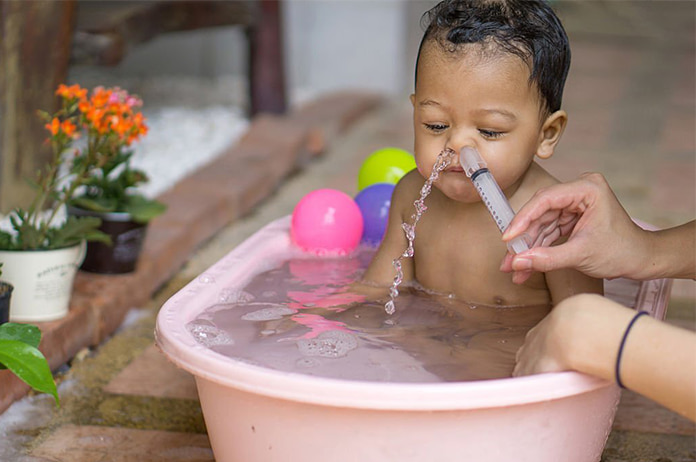
Most treatment relies on cleaning the child’s nose with saline solution or nasal spray.
So, it’s essential to know how to properly clear a child’s nasal congestion. Within 10 days, everything should be fine, but if symptoms worsen or their health deteriorates, don’t hesitate to consult a doctor.
Symptoms of the First Cold in Children
Children can get 6 to 10 colds per year on average. In fact, there are at least 200 viruses responsible for colds! Mild colds are embarrassing for children at this age up to 3 years old because the child doesn’t know how to blow their nose themselves.
Inflammation of the nasal mucosa manifests in newborns and infants with:
- Sneezing
- Fever that can reach 38.5 degrees Celsius
- Runny nose
- Eye discharge
- Nasal congestion
- Mild cough
When children catch a cold, less prominent symptoms may appear, such as:
- Feeding difficulties
- Vomiting
- Diarrhea
- Angry state (screaming and crying to breathe)
- Mild fever
Useful information: Breastfed babies are protected by antibodies transmitted through breast milk. During their growth, they should build their immune system, and episodes of nasal pharyngitis contribute to that.
How Long Does This First Cold Last?
Unlike adults who can recover from colds relatively easily, it takes longer for infants. On average, it takes from two to three days from the onset of fever – which is the first symptom to disappear – and an average of 6 to 8 days in total to see the child recover from this initial viral episode.
It’s the nose that can remain blocked for a long time in a child of this age, so it’s important to continue washing it well to help them breathe. Generally, colds heal spontaneously in less than 10 days.
First Cold for a Child: Risks Before 3 Months?
Nasal inflammation “newborn” causes specific problems because at the beginning of life and up to three months, the child doesn’t know how to breathe through the mouth. So it’s important to clean the noses of children with colds.
If you don’t know how to clean the nose properly with saline solution or nasal spray or if you’re concerned, you should consult a doctor! For this first cold, the consultation allows the baby to be examined: then we make sure that the fever, diarrhea, vomiting, crying, and angry state… are indeed from the cold.
In case of breathing difficulties, hospital treatment may be necessary.
First Cold for a Child: How to Treat It?
Here are some tips for parents dealing with a child whose health is deteriorating due to a cold:
- Clear your child’s nasal congestion when they have a cold using saline solution swabs, nasal spray, or a baby nasal aspirator
- Systematically before meals and bedtime but also “on request,” i.e., when they feel embarrassed, when they cough…
It’s advisable to drink and eat in small quantities to avoid vomiting:
- Don’t force him to eat and drink even water, he might vomit everything!
- It’s preferable for him to eat more often but in smaller quantities
- Drink water more often but in small amounts
If he’s suffering from fever
- Don’t heat up the living place: 19 degrees Celsius are sufficient
- Don’t cover him too much to avoid raising the temperature further: a layer, perhaps a bodysuit, may be sufficient. For sleep, for example, we can cover him with a light sleep bag
What are the treatments and medications for colds?
- The main treatment for reducing fever is paracetamol. When and how to use paracetamol? Doctors recommend: Pay attention to treating the discomfort of young children rather than treating the temperature! If the child seems very low with a temperature of 37 degrees Celsius, he will be given paracetamol. We won’t give it necessarily if the baby is in good health and plays as usual, even if his temperature reaches 39 degrees Celsius.”
- It’s not advisable to use cough syrup for children over the age of two. They are strictly prohibited in children under this age. So, there’s no question of giving any syrup at all to your child.
- Bathing two degrees Celsius below the baby’s temperature is no longer advisable: it may worsen the discomfort. This procedure should be reserved for severe fever that cannot be tolerated despite antipyretics, if you feel that your child likes it and is comfortable.
Preparing the Room for the Evening
- Moisten the air by drying clothes in the baby’s room
- To help the baby breathe better, elevate the head of the bed slightly by placing a small pillow under the mattress (not too thick so that the baby doesn’t risk slipping to the bottom of the bed…).
First Cold for a Child: When to Worry and Consult?
- Fundamental behavioral changes: if he becomes very flushed or severely affected, has unusual nighttime awakenings, etc.
- If the fever persists for more than 2-3 days or reaches 40 degrees Celsius (and above)
- If he’s having difficulty breathing
- If he touches his ear
- If he has severe diarrhea and vomiting
- If his eyes are matted with pus
Preventing Colds
“`Colds are highly contagious viral illnesses. However, simple measures can limit the transmission of the virus. In fact, the virus spreads through direct contact (sneezing, kissing, handshaking, etc.) or indirect contact, such as objects contaminated with the saliva of a sick person (utensils, toys, towels, etc.).
To avoid transmitting the cold to the child, it is necessary to protect him from viruses that spread through these two routes by following these few tips:
- Ventilate the child’s room after moving him to another room for at least 10 minutes each time
- Cough or sneeze into your elbow or tissue and dispose of it properly
- Avoid kissing the child on the face if you have a cold and protect yourself with a mask if necessary
- Blow your nose into a tissue and dispose of it immediately afterwards
- Wash your hands thoroughly with soap or an alcohol-based solution regularly, and if possible each time after blowing your nose or coughing or sneezing
- Protect your child from tobacco smoke, which exacerbates all nasal, ear, and throat infections in children