

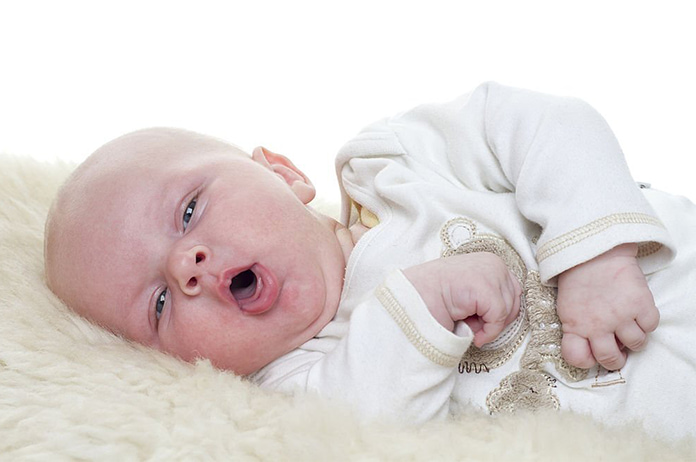
Dry, oily, wheezing, in bouts, or accompanied by wheezing… Your baby’s cough might be fascinating. So what do you do when your baby coughs? When should you seek advice?
Coughing: A Natural Mechanism
Coughing can result from a viral respiratory infection such as a cold, pharyngitis, bronchitis, laryngitis, bronchiolitis, sinusitis, pneumonia, or whooping cough. But coughing, especially when chronic, can also be associated with other conditions such as gastroesophageal reflux, asthma, allergies…
There are different types of cough:
- Dry or “bothersome” cough is a sign of irritation of the airways, often accompanying colds and other respiratory infections. Accompanied by wheezing, it might be associated with asthma.
- A wet or “productive” cough indicates congestion of the respiratory passages with mucus. It causes phlegm or sputum, especially in cases of bronchitis.
- Harsh cough or cough accompanied by voice loss is often a sign of croup (or laryngotracheitis), responsible for swelling of the respiratory tract.
Coughing is a natural defensive reaction. Through coughing, the baby’s body fights germs or clears the mucus occupying the back of the throat, allowing for better airflow.
Different Types of Cough and Their Causes
Depending on the types of cough, there may be different conditions:
- Wet cough: colds, respiratory infections, pneumonia
- Dry cough: whooping cough, asthma, allergies, bronchitis, sinusitis, choking, colds, pneumonias, respiratory diseases
- “Barking” cough resembling seal barking: croup (laryngotracheobronchitis)
Cough can persist.
Symptoms in Children
Wet cough in newborns, children, or adults may be associated with other symptoms:
- Runny nose
- Tiredness
- Swollen lymph nodes
- Mild fever
- Irritation
- Loss of appetite
When several of these symptoms appear, the child may have a viral infection. Additionally, lying down can lead to wet coughing, so it may worsen at night.
Proper Responses to Coughing
To prevent the condition from descending into the airways, it’s essential to respond quickly by adopting simple and effective reactions.
Tips:
- Remember to rinse your child’s nose with saline solution at least 4 times a day
- Ventilate his room
- Keep the temperature at 19 degrees Celsius
- Also ventilate your home or apartment at least once a day for 5 to 10 minutes
- You can dry your wet clothes on a drying rack placed in your child’s room. This will humidify the air, which can sometimes be too dry
- Place the child upright (in his chair or in a baby carrier) as it’s easier to breathe in a semi-sitting or upright position than lying down
- Elevate your mattress using a baby slope
- Make sure the child drinks water regularly to thin the airway secretions
- Divide his meals if the cough makes him lose his appetite
- Obviously, remember not to smoke in the presence of your child
Children’s Cough: When to Consult?
Usually, a coughing child is tired, and he may also lose his appetite. You should take him to a pediatrician if:
- He has a fever
- He eats less than half of his usual portion
- His cough worsens
- His breathing becomes wheezy
Your child may have laryngitis (inflammation of the larynx), a bout of asthma, gastroesophageal reflux, or bronchiolitis. “For an infant under 3 months old, bronchiolitis may require hospitalization, so go to the pediatrician for an evaluation,” continues the doctor. On the other hand, if the child has referrals, or even vomits from coughing, there’s no need to panic, without fever or stomach pain, it’s probably reflux.
Life-threatening Emergency: The Wrong Way
If your child swallows a piece of food or something small and is no longer able to breathe properly, call emergency services immediately.
To respond as effectively as possible in the event of a child choking, don’t hesitate to follow the First Aid for Children and Infants initiative led by the Red Cross. This unit lasts for 4 hours and provides you with the key elements for a good emergency response.
Treating Cough in Children
Cough usually clears within 10 days. If not, don’t hesitate to consult the doctor again.
If your child is under 2 years old: Be aware that your treating physician will not prescribe cough medicines or expectorants: they are contraindicated at this age. It’s necessary to respect the productive cough (so-called fat), as it allows the expulsion of secretions.
If your child is over 2 years old: The use of cough medicines is limited to non-productive (or dry) cough. Follow your treating physician’s recommendations.