
Jaundice in Newborns: What Is It?
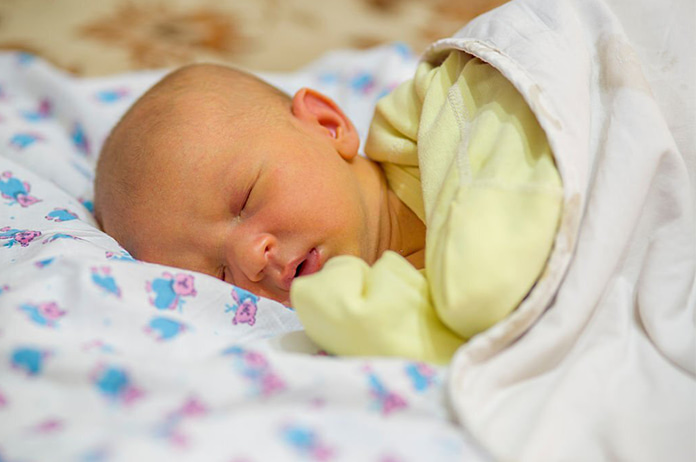
Jaundice in newborns, also known as physiological jaundice, is often due to transient immaturity of the liver resulting in increased bilirubin in the blood (conjugated or unconjugated). The richness of blood in bilirubin (a yellow pigment) colors the baby’s skin and mucous membranes yellowish with transparency.
Usually, red blood cells are continuously produced in the bone marrow. Then they move into the blood and after 120 days they die in the spleen. This natural destruction results in the release of unconjugated bilirubin. This unconjugated bilirubin then reaches the liver where biochemical processes convert it into conjugated bilirubin, which is one of the components of yellow color. This yellow pigment is the origin of the color of stool and urine.
Jaundice often disappears spontaneously within a few days, but consultation is necessary if it persists or worsens. In fact, jaundice can also be a symptom of a more or less serious illness in children.
Symptoms of Jaundice
Jaundice in newborns usually appears after 24 to 48 hours of birth.
The baby’s color is yellow but there are no other abnormal signs. The size of the liver on palpation is normal. The spleen is not enlarged. Usually, stool and urine are colored.
This physiological jaundice generally disappears in less than 3 weeks.
Certain conditions increase its severity: oxygen deficiency, acidosis, hemolytic diseases, hypoglycemia, administration of certain drugs, etc.
Various Causes of Jaundice
Breastfeeding Jaundice
Newborns who breastfeed sometimes suffer from jaundice that persists beyond the usual limits. The cause of “breastfeeding jaundice” is the presence of a substance in some women’s breast milk that inhibits bilirubin metabolism in the liver.
The color of these newborns remains yellow as long as breastfeeding continues. This type of jaundice poses no risk and breastfeeding should not be stopped under any circumstances.
Rhesus Incompatibility
In newborns, in addition to this natural destruction, there are diseases that cause early destruction of red blood cells. This is particularly the case with rhesus incompatibility between the fetus and the mother.
Red blood cells are destroyed in large numbers. The liver is overwhelmed and cannot metabolize all the unconjugated bilirubin reaching it, resulting in increased blood levels. Hereditary hemolytic diseases can be detected from birth by severe jaundice.
Liver Problem
In other cases, the liver is sick. Bilirubin cannot be converted:
“`html
- Either because it’s infected (hepatitis)
- Or because enzymes are deficient or inhibited (medications, etc.)
Another reason: blood breakdown may be normal, and the liver may function properly, but there may be an obstacle to the flow of bilirubin causing conjugated bilirubin retention. This transfers to the blood and elevates its level, causing what’s called “cholestatic jaundice” (or neonatal cholestasis). In this case, the color of the stool changes.
What are the risks for infants?
The occurrence of jaundice in infants poses two problems:
- Because as much as physiological jaundice is well diagnosed, cholestatic jaundice is a medical emergency.
- Due to its direct neurotoxicity at a certain level of unconjugated bilirubin in the blood, it becomes harmful to the brain and can cause a serious neurological disorder: kernicterus. Speculation is weak as the child risks significant neurological damage (profound deafness, abnormal movements, tone disorders, etc.). Hearing monitoring should be conducted after severe jaundice.
Jaundice Treatment with Phototherapy
The goal of treating physiological jaundice is to prevent a sharp rise in bilirubin levels due to the risk of jaundice.
Monitoring is done by placing a small electronic reader (“flash”) on the baby’s skin, which gives an indication of the bilirubin level in the blood.
In case of high values, control is done by a simple blood test. From a bilirubin level of 130 to 150 mg/l (220 to 250 µmol/l), the newborn is exposed continuously, naked in an incubator, to the effect of “blue” lamp or neon lights: this is phototherapy.
Premature babies benefit from this procedure at lower rates. The eyes are protected from light by an eye bandage. The baby’s temperature and hydration status are monitored to prevent heatstroke.
Phototherapy treatment stops after a few days when the level of unconjugated bilirubin drops below dangerous levels. When this therapeutic measure is not sufficient, other treatments are performed in a specialized unit.