

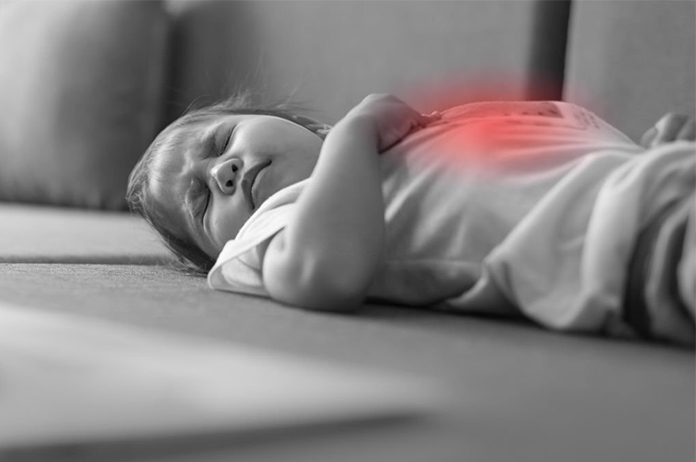
Children aged 5 to 12 months are the most affected. However, we notice stomach and intestinal inflammation most often before a year exactly.
Acute forms of diarrhea can be responsible for hospitalization. Diarrhea, fever, and accompanying vomiting (generally) in cases of stomach and intestinal inflammation are the cause of severe dehydration in young children.
Every winter, viruses cause outbreaks of stomach and intestinal inflammation, especially within child communities. They can remain active on hands for 4 hours, and on objects for several days or even weeks. Therefore, transmission occurs through hands and objects (children’s toys, door handles, work surfaces, etc.).
Cleanliness Rules to Prevent Stomach and Intestinal Inflammation
We know the conducive factors leading to the transmission of this diarrhea virus. These include collective childcare, sharing toys with other children, dirty fingers in the mouth, diaper manipulation… So, it’s difficult to limit all these factors because the child doesn’t live in a bubble. But we can indeed insist on hygiene measures and household cleanliness.
Handwashing
Your main ally against stomach and intestinal inflammation is effective handwashing for 30 seconds with water and soap.
- Wash your hands frequently (before preparing meals, before eating, after using the toilet or bathroom, after changing diapers, etc.)
- Wash your child’s hands (after blowing their nose, after playing, before meals, if their hands are dirty…)
Clean Your Home
- Regularly clean your child’s room and toys.
- Clean your child’s toilet and potty with a disinfectant after every diarrhea episode
- Store toothbrushes separately
Meal Preparation
- Wash your hands before starting to cook
- Clean kitchen utensils and your work surface
- Patients should not participate in meal preparation
- Avoid sharing cups and utensils on the table
Communication with Others
To prevent the spread of stomach and intestinal inflammation, it’s best to avoid contact between your child and other people as much as possible.
- During the acute stage of the illness, do not send your child to daycare or school.
- Do not take your sick child to crowded public places.
- Avoid touching your mouth or nose without washing your hands first.
What to Do in Case of Stomach and Intestinal Inflammation?
If your child is suffering from acute diarrhea, schedule an appointment immediately with the doctor who will assess the severity of the disorder. And continuously monitor the child.
Sometimes dehydration can occur very quickly: within a few hours during the day, the child can lose a lot of water and find themselves in a serious condition. To do this, weigh your child to detect potential dehydration, compensate for fluid and mineral salt loss with oral rehydration solutions, count the number of stools and vomits, measure the amount of fluid consumed, and regularly measure their temperature.
Sometimes the stool is so liquid that parents don’t notice it, even if they think the child has just urinated in their diaper. Therefore, it’s necessary to monitor them and not hesitate to take them to the emergency room without any doubt:
- If your child vomits frequently and stops drinking
- If your child stops eating and drinking
- If diarrhea persists and worsens
- If diarrhea is accompanied by a fever above 38.5 degrees Celsius
- If the stool contains mucus or blood
- If signs of dehydration appear on your child