
Tracheobronchitis: Causes, Symptoms, and Treatment
Tracheobronchitis is a highly contagious viral infection that affects the bronchi (small airways). This condition primarily affects infants and young children, peaking between two and eight months of age.
Tracheobronchitis: What is it?
Tracheobronchitis is an acute infection of the lower part of the respiratory system (more precisely, the bronchi) in children under two years old. This disease mainly affects children under 6 months of age. Some children suffer from recurrent setbacks.
If the disease seems impressive, treatment is often symptomatic and based on cleaning the nose and throat (nasopharyngeal congestion) with the help of physiological serum, humidification, maintaining food intake by dividing doses, and oxygen therapy (if necessary).
Transmission: How is Tracheobronchitis Transmitted?
Tracheobronchitis is a highly contagious viral disease transmitted from person to person through respiratory secretions when speaking, coughing, sneezing, or nose blowing. Direct contact, such as kissing, also enhances the transmission of tracheobronchitis.
The child can also be contaminated by hands or objects contaminated with saliva secretions, such as toys, clothes, food, or drinks.
Tracheobronchitis Symptoms
Tracheobronchitis often starts after a simple infection in the respiratory system, in other words, a cold that quickly worsens. Tracheobronchitis heals spontaneously within 8 to 10 days on average, even if the cough persists for two weeks. The main symptoms of tracheobronchitis are:
- Appearance of a cold with low-grade fever, runny nose, intermittent dry cough
- Then respiratory difficulties appear: rapid and shallow breathing, the baby pants, drinks less and less. Refuses bottles
- Breathing is accompanied by signs of retraction between the ribs and above and below the sternum. There are beats on the nostrils. The child is said to be “digging” to breathe
- Respiratory failure is accompanied by restlessness, paleness, and blueness
- Low to moderate fever.
Tracheobronchitis Diagnosis
Tracheobronchitis is not a self-treatment. Make an appointment with your doctor or pediatrician.
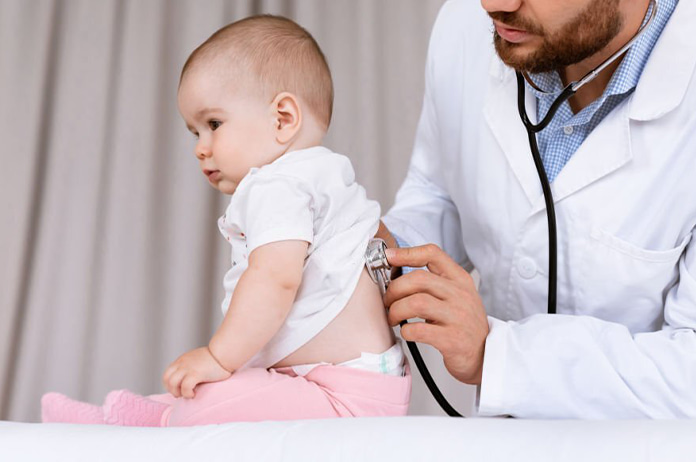
During the consultation, the doctor examines the child to see the symptoms of tracheobronchitis. In pulmonary auscultation, the pediatrician can hear some scattered wheezing and some whistling (wheezing).
Based on his examination, the doctor may request hospitalization of the child. There is no need to panic, as staying in the hospital allows monitoring of the child’s respiratory system, especially if he is very young. It is a precautionary measure that makes it possible to carry out respiratory assistance or resuscitation or any other necessary care to quickly overcome this difficult period.
So that doctors can better guide children and avoid systematic hospitalization, the World Health Organization recommends classifying cases according to three levels of risk:
- Mild forms do not require hospitalization
- Moderate forms may lead to it on a case-by-case basis
- Severe cases are immediately referred to the hospital
What to Do If Your Child Has Tracheobronchitis?
- Regularly clear your child’s nasal congestion by instilling saline solution
- Ensure your child drinks plenty of fluids in small amounts, as good hydration helps relieve airway secretions
- Divide meals to reduce feeding difficulties related to tracheobronchitis
- Elevate your child’s chest for sleeping using pillows placed under the mattress
- Ventilate the room and maintain a temperature of 18-19 degrees Celsius
- Do not smoke in the presence of the child or in a room where he may be staying
- Wash your hands before and after caring for the child
- Wear a mask if you have a cold
How to Wash Your Child’s Nose?
Although washing the nose is unpleasant for the child, it is necessary to help him expel secretions. Nasal drainage relieves the child who cannot breathe properly through the mouth when he is less than 6 months old. Cleaning his nose helps him reduce his suffering for breathing. Wash it several times a day, especially before meals and before bed.
To properly wash your child’s nose with saline solution:
- Wash your hands
- Prepare two capsules of saline solution
- Place your child on his back or tilt his head to one side or fix him on his side while carrying him. His head should be on the side to prevent serum from entering the airways
- Insert the tip of the syringe gently but firmly into the right nostril opening (if the child’s head is on the left)
- Pour the contents of the capsule completely into the nostril opening
- Close your child’s mouth: this allows the saline solution to circulate and exit through the other nostril opening with nasal secretions
- Wipe away the mucus
- Perform the same movement by rotating the child’s head to clean the other nostril opening
There is a different type of nasal wash in the lying position, especially when the child is old enough to sit:
- Place the child in a sitting position with his back on your stomach
- Insert the contents of the capsule into one nostril, then close the child’s mouth
- Do the same thing in the other nostril opening
This position is more comfortable for the child.
Treatment of Tracheobronchitis
Medical Treatment for Tracheobronchitis
The doctor will prescribe treatment for initial nasal, ear, and throat infections: nasal wash, nasal secretion suction, pharyngeal cleansing, and room air humidification.
In case of suspicion of secondary infection, after X-rays of the lungs, the doctor may prescribe an antibiotic and sometimes airway sessions. On the other hand, antibiotics do not affect viral infections and therefore the virus responsible for tracheobronchitis (RSV or respiratory syncytial virus causes 70% of cases).
Treatment in the Hospital Includes:
- Inhaled air humidification
- Oxygen spray with humidification factors, bronchodilators (Ventolin), inhaled corticosteroids
- Stomach tubing or intravenous feeding
- Antibiotic therapy to prevent lung infection
- Local treatment: placing the child in a semi-upright position
Prevention of Tracheobronchitis: Can This Infection Be Avoided?
Several measures can prevent tracheobronchitis:
- Get your child used to washing his hands before meals, after returning from every outing, after using the toilet, etc.
- Wear a mask if you have a cold or cough: Colds in children or adults can cause tracheobronchitis in children. Avoid contact between a baby under 3 years old and other young children
- If one of the siblings is sick, keep them away from the child if possible
- Regularly clean everyday items and children’s toys
- Avoid public places with a child under 3 months old