

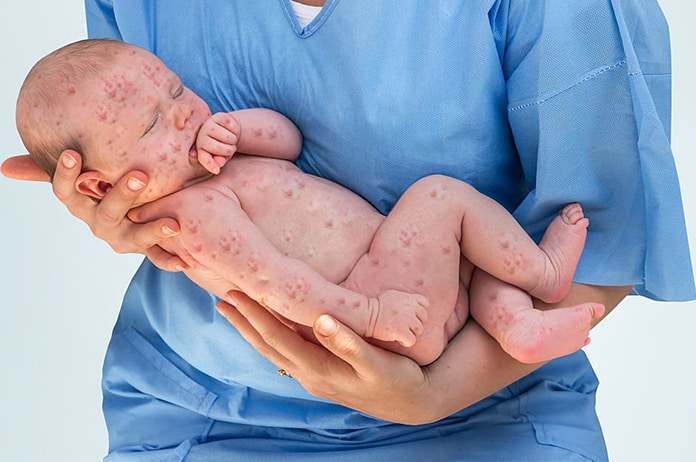
Roseola is a benign viral illness that specifically affects young children, particularly before the age of two. It typically presents with a fever followed by a rash (sometimes). Treatment primarily focuses on alleviating the child’s fever.
Roseola: What is it?
Roseola, also known as “sixth disease,” or “sudden rash,” or “three-day fever,” is a viral illness that affects children. The virus responsible for the disease is a member of the human herpesvirus 6 group.
In more than 9 out of 10 cases, roseola appears before the age of two (peaking between 7 and 13 months).
The roseola virus enters the body through the respiratory tract. It is transmitted through nasal and throat secretions, meaning through droplets of saliva naturally expelled into the air when the infected person speaks, coughs, or sneezes.
Roseola Symptoms
Symptoms typically appear after an incubation period of 5 to 15 days.
The illness appears suddenly and lasts for three days with a high fever (39-40 degrees Celsius), resistant to antipyretic medications (fever reducers), so it does not decrease. This fever is mostly isolated but can be accompanied by digestive disturbances, severe irritation, slight swelling around the eyes, slight swelling of glands in the neck (lymphadenopathy), or sometimes convulsions.
Then, on the fourth day (or even the fifth day), the temperature drops while small pink spots appear on the face, chest, back, and roots of the limbs sometimes (from 3 to 5 millimeters in diameter) that will disappear spontaneously after 12 to 24 hours, or even within 36 hours. But they can also disappear within a few hours.
Note: In some cases of roseola, the child may simply have a fever without a rash. But the reverse is also true, with only the appearance of the rash.
Roseola Treatment
Roseola is not serious, but the fever it causes worries parents as well as the doctor. In fact, diagnosing roseola is only possible after the fever and appearance of the rash.
The only treatment for roseola is fever management. If your child is over three months old, give them paracetamol or ibuprofen. The dose should be adjusted according to their weight.
- For paracetamol, a maximum of 60 mg per kilogram per day, divided into four or six doses, approximately 15 mg/kg every six hours or 10 mg/kg every four hours.
- For ibuprofen, a maximum of 20 to 30 mg per kilogram per day, divided into three or four doses, maximum 10 mg/kg every eight hours or 7.5 mg/kg every six hours.
Pay attention to the fever. If it’s high, undress your child. Remember to give them plenty to drink and any prescribed medication. If your child is under 3 months old, in case of seizures or drowsiness, consult your doctor without delay.
Rare Complications
Known complications include:
- Seizures due to high fever
- Viral meningitis
- Decrease in platelet count
- Liver damage from the virus responsible for hepatitis
How to Prevent Roseola Transmission?
The disease is transmitted through the respiratory tract, nose, and throat. To prevent contamination among other young children, some simple measures can be followed:
- Wash your hands regularly, as well as the child’s hands
- Use disposable tissues for secretions
- Regularly clean your child’s nose with saline solution
- Clean toys and items used by the sick child
- Avoid contact with other young children
- Ventilate your living space for about 20 minutes a day