

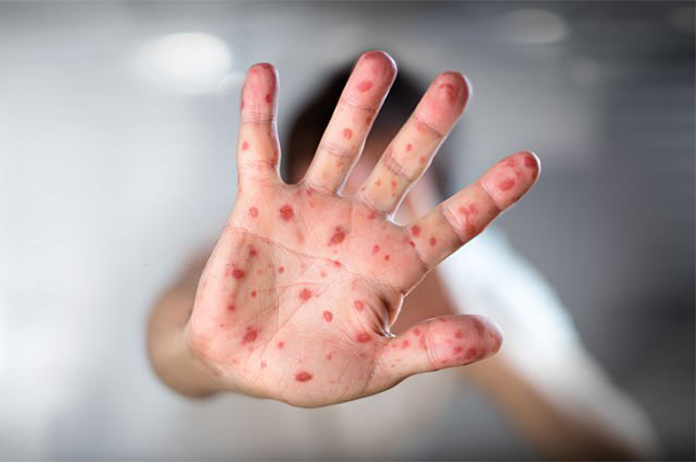
Measles is a highly contagious viral disease. A rash precedes symptoms such as nasal inflammation, conjunctivitis, cough, and mild fever.
What is Measles?
If you’re wondering whether measles is still around, the answer is yes. This highly contagious viral disease. Globally, in 2019, the World Health Organization reported 869,770 cases of measles.
Measles is the most contagious rash fever affecting the most children and infants worldwide. Its complications, rare in Western countries, are recurrent in the third world and are responsible for a high mortality rate. In fact, estimates indicate the deaths of 207,500 individuals worldwide.
Transmission of Measles in Children
Measles is associated with a type of virus called the paramyxovirus. It spreads in epidemics in winter and spring in temperate countries. Children under 6 months are generally protected through antibodies from their mothers (if they are infected with measles or vaccinated).
Contamination occurs through the projection of saliva droplets from infected individuals when coughing or sneezing. Transmission can also occur through objects contaminated with secretions (toys, tissues, etc.). The patient is contagious four days before the eruption. The virus disappears from the blood four days after the rash appears. An infected person infects 15 to 20 people, which is why the infection rate for this disease is high.
What are the Symptoms of Measles in Children?
The disease is usually noticed in the pre-school age. The incubation period is about 10 to 12 days after infection. Progression to the hands and feet takes 3 days and lasts for 5 to 6 days. The symptoms of measles in children are:
- Fever
- Conjunctivitis
- Eyelid swelling
- Swollen, red, watery eyes
- Runny nose
- Dry cough
- Koplik spots, which allow diagnosis: small white spots, the size of a pinhead, on the red mucous membrane on the inside of the cheeks opposite the molars
- Measles eruption: three or four days after the appearance of Koplik’s sign, small red spots appear either here or there with a diameter of a few millimeters in large areas, but they always leave intervals of healthy skin between them. The rash begins on the face behind the ears and gradually spreads to the child’s body.
During this eruptive stage, the fever remains high, and coughing and bouts of “eye-ear-nose-pharynx-larynx-gut” (eye discharge, ear inflammation, nasal inflammation, chest pain, pharyngitis, diarrhea) continue.
The child with measles is extremely tired. When the rash disappears, it gives way to a visible fine peeling for a few days. Fever disappears unless complications occur. The recovery period lasts for ten days, and the child remains tired.
How to Differentiate Between Measles and Chickenpox in Children?
Measles is not the only rash disease that children can contract. However, the skin symptoms of chickenpox differ from those of measles. In the case of chickenpox, the pimples first appear on the child’s chest and face, then spread all over their body. The rash in measles first appears on the face, extends to the upper body, and then reaches the limbs. Measles in children is accompanied by other symptoms, and the body spots are very red. Chickenpox pimples are more pinkish. They are filled with fluid, dry, and then form scabs. As for the pink rash, the small spots are pink.
Complications: What are the risks for a child with measles?
Complication rates vary depending on the patient’s age, geographic area, nutritional status, and immune status.
They make all the danger of this viral infection. Namely:
- Acute otitis media (7 to 9% of cases) and pharyngitis
- Bronchitis and pneumonia (pneumonia in 1 to 6% of cases)
- Diarrhea (in 8% of cases)
- Malignant measles pneumonia, which can cause respiratory distress and sometimes death
- Sequential pneumonia
- Pneumococcal pneumonia
- Bacterial bronchopneumonia
- Measles-induced encephalitis (one case per 1000 measles)
- Subacute sclerosing panencephalitis
Measles-induced Meningitis in Infants and Children
Sixty percent of cases recover without consequences. Other children will die or survive with severe neurological sequelae.
It cannot be predicted and has no correlation with the severity of measles. Its appearance often occurs between the third and seventh day after the eruption.
The onset is harsh, starting with fever and various neurological disorders:
- Convulsions
- Disturbances of consciousness (obstruction or coma)
- Neurological disturbances
- Psychological disturbances (prostration, apathy, excitement, aggressiveness, delirium, etc.)
- Focal neurological disorders (facial paralysis, eye paralysis, hemiplegia, loss of speech, etc.)
- Extrapyramidal disorders (hypertonia, tremors, etc.)
- Balance disorders (swaying, swaying, etc.)
Complications According to the Child’s Background
Some are more prone to the risk of complications. They are:
- Suffering from cystic fibrosis
- Suffering from acute malnutrition
- Heart defects
- Respiratory arrest
- Treated with corticosteroids
- After chemotherapy for cancer
Newborns and infants a few months old born to mothers unprotected against measles are also at risk.
Desquamation (removal of superficial layers of the skin in small flakes) is very visible as a thin white powdery layer.
Complications are very common:
- Bacterial pneumonia
- Bronchiolitis
- Pharyngitis
- Oral inflammation
- Conjunctivitis
Measles accelerates the fatal progression of acute malnutrition.
Measles Treatment
Curative Treatment
Theoretically, measles is a notifiable disease. Hospitalization should be avoided except in cases of:
- Serious complications (main bronchial pneumonia, suffocating laryngitis, encephalitis)
- Risk factors (cystic fibrosis, respiratory failure, etc.)
- Social reasons
Antibiotics are often necessary in case of bacterial infection (ampicillin, macrolides, etc.). Symptomatic treatment includes usual measures against fever: hydration (plentiful drinks) and rest.
Preventive Treatment
It relies on two things:
- Immunoglobulin prophylaxis used within 48 hours of infection
- Measles vaccine
Measles Prevention in Children
Some simple measures can help reduce the spread of measles virus:
- Regular handwashing and teaching children how to do it properly
- Wash children’s noses with saline solution
- Cover children’s (and teens’) mouths when coughing or sneezing
- Use tissues
- Clean objects used by the patient
- Avoid kissing the patient
- Keep the patient’s toothbrush away after use
- Ventilate your home once a day for about 20 minutes
- Respect social isolation for 5 days after the appearance of the rash
Child Vaccination Against Measles
Vaccination Against Measles, Mumps, and Rubella: At What Age?
All children and young people should be vaccinated against measles. It is a vaccine that prevents the disease in about 100% of cases after two doses of the vaccine. It is mandatory for all children born from January 2018.
The vaccine can cause a mild clinical reaction after about 8 days of vaccination: fever up to 38 degrees, skin rash… Like any fever, fever after this vaccine can cause febrile convulsions (one case per 2000 vaccines).
To achieve herd immunity, the World Health Organization indicates that 95% of the population must be protected through vaccine coverage that includes two doses of the vaccine.
Vaccination Schedule
At 12 months of age, the child receives the first dose of serum against measles, mumps, and rubella. The second dose of serum is given after 4 to 6 months, i.e., between 16 and 18 months, according to the latest official recommendations. Measles vaccination can be simultaneous with vaccination against pneumococcal C.
Note: 5% of vaccinated children may not have sufficient protection from the vaccine and may contract measles. This could be typical measles or “modified” measles accompanied by slight fever, a mild rash, or a brief rash that can appear immediately on the trunk or limbs.